
4×4 video wall controllers.
Sixteen displays — and a controller built for input density, redundancy and 24/7 stability.
The question stops being “can it drive the wall.”
Four chassis — three FPGA-class, one entry HDMI.
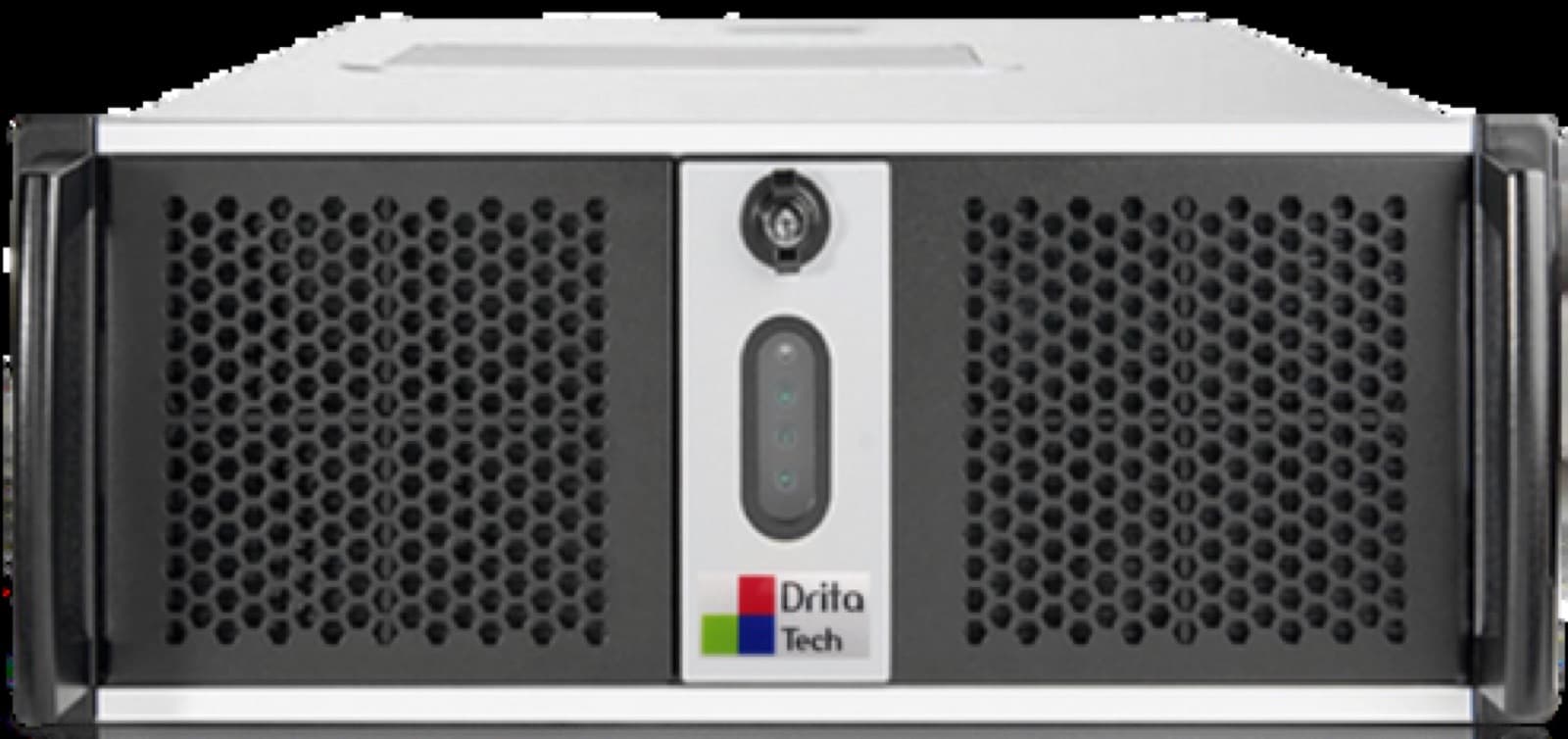
Drita DT4000 (FPGA Multi-Screen)
Often the right answer at this scale.
- Architecture
- Virus-free real-time FPGA · 1U–14U 19″
- Outputs
- Up to 72 (covers 16 with deep headroom)
- Inputs
- Up to 64 HD or 32× 4K capture (or 256 CVBS)
- Reliability
- Hot-swappable cards, fans, redundant PSU · PIP/POP · preset scheduling · anti-burn-in
- Control
- Web · C/S · iOS / Android · Crestron · AMX · RS232 / LAN
- Certifications
- BIS / ISO / NSIC
- Why this
- BFSI war rooms, traffic control, defence — projects where uptime is the spec.
Drita DT4000 (Windows)
When IP / web / VNC sources dominate.
- Compute
- Intel i7 octa 3.3 GHz / Xeon · 8–64 GB RAM · 2× 1 TB HDD or 2× 480 GB SSD RAID-1
- Outputs
- Up to 12× 4K-UHD or 64× FHD
- Inputs
- Up to 64 mixed across DVI / HDMI / DP / SDI / analog
- Power / chassis
- 4U 19″ · 800 W redundant PSU
- Software
- Windows 10 64-bit Pro · Drita WMS or Jupiter Canvas
- Why this
- Right when the wall integrates with IP cameras, RTSP, web dashboards, VNC and signage CMSes.
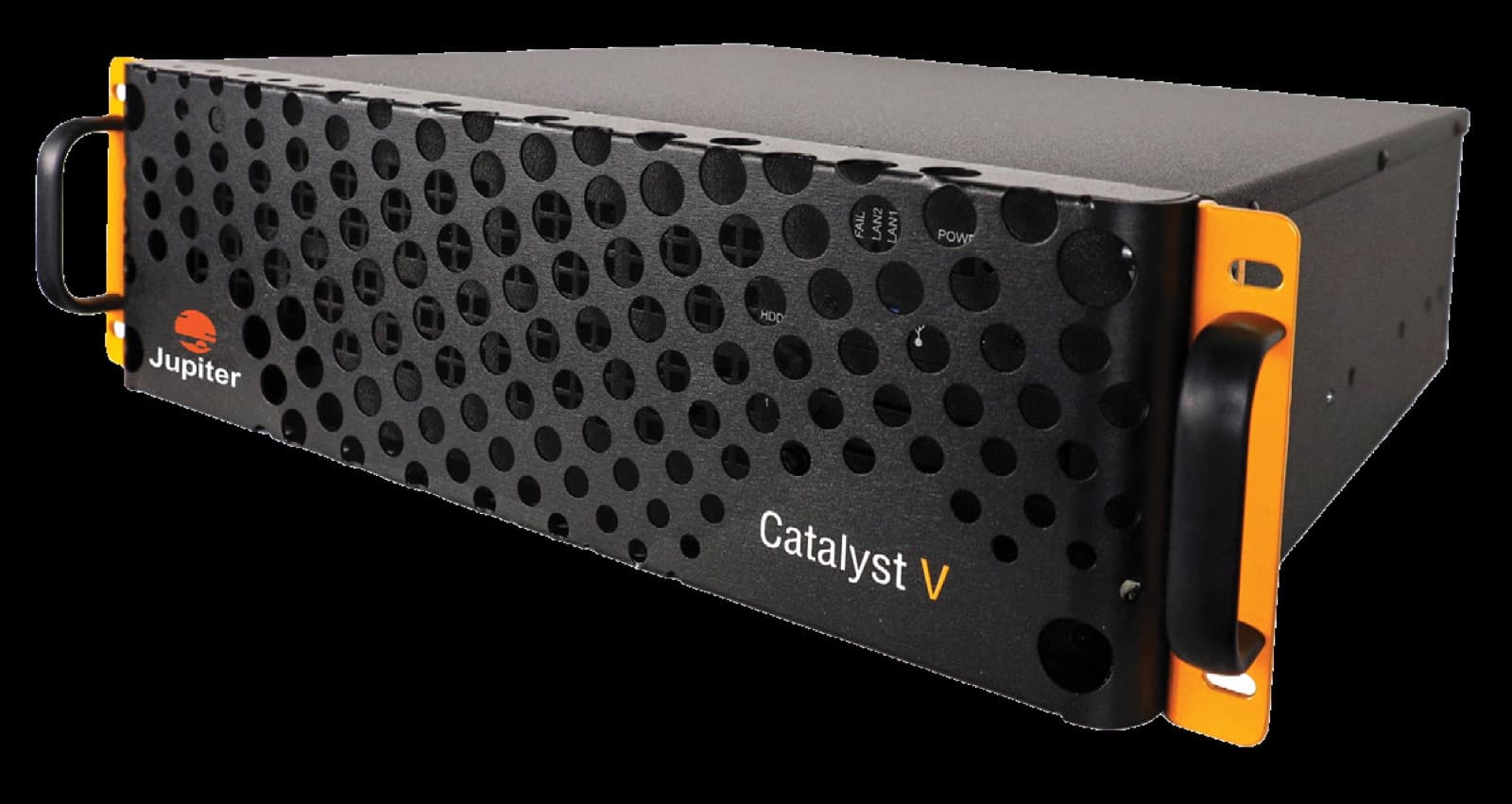
Jupiter Catalyst V
Premium boardroom or briefing-centre 4×4.
- Inputs
- Up to 16× 4K direct · 120+ H.264 streams · HDCP 1.4 / 2.2
- Outputs
- Up to 64 FHD or 16× 4K (covers 4×4 in 4K)
- Reliability
- RAID 1 + Hot Spare · redundant PSU · 3RU
- Software
- Standalone or Canvas Enterprise managed
- Why this
- When the 4×4 is the showpiece in a premium boardroom or briefing centre.
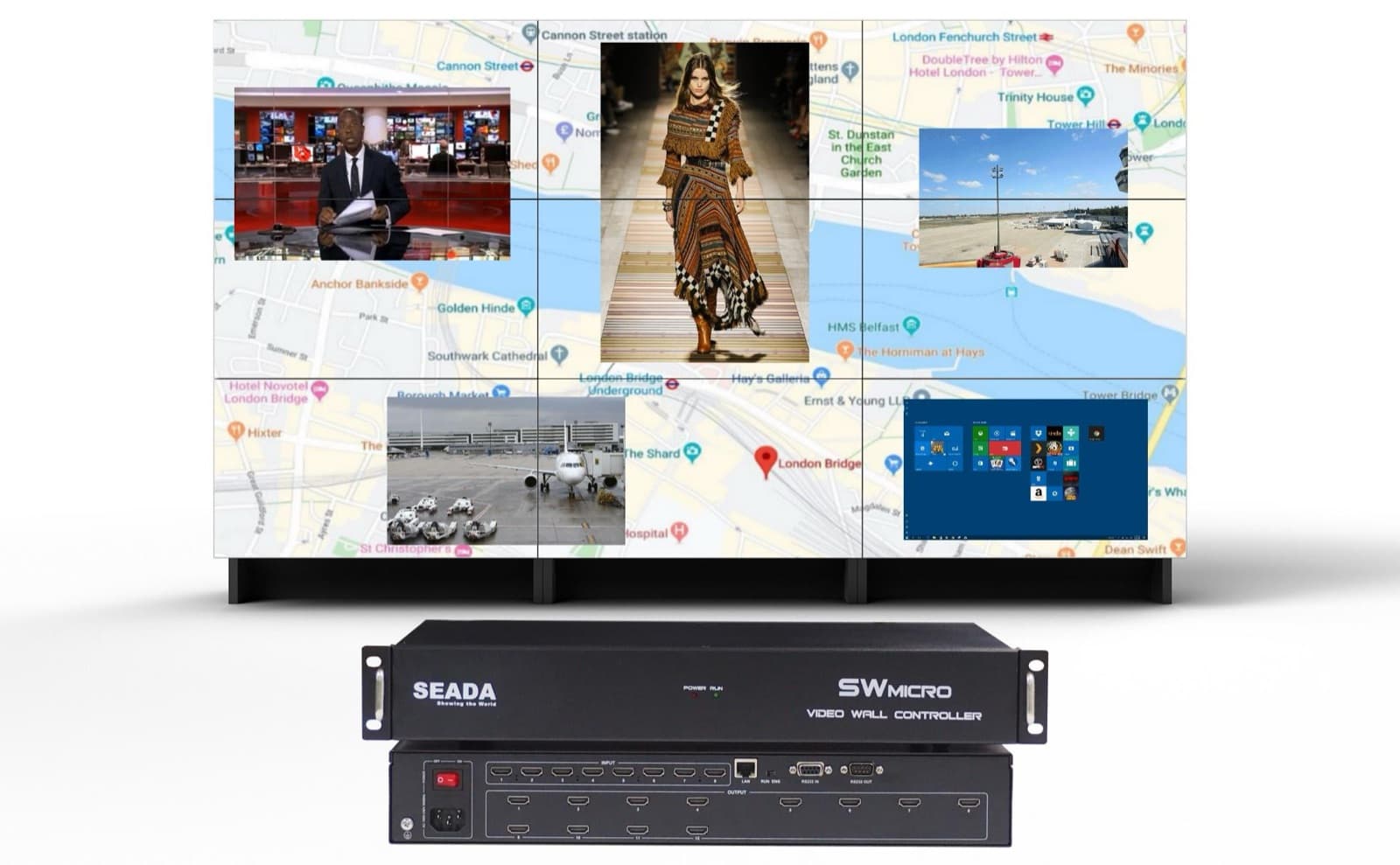
SEADA SolarWall Micro (SWMicro 16)
Lower-cost option for HDMI-source 4×4.
- I/O
- 8× HDMI in · 16× HDMI out
- Architecture
- FPGA Crossbar · HDCP
- Modes
- Layout looping · 2- or 4-window overlay · custom presets
- Chassis
- 1.5U · AC 100–240 V · standalone
- Why this
- Lobby and retail 4×4 walls where content is mostly fixed scenes from HDMI sources.
Plan for headroom on outputs and density on inputs.
- Outputs
Sixteen is the floor — design for 18–20 to cover spares and future growth without restripping cards.
- Inputs
Usually 16–32 in a real NOC once you count cameras, NVR feeds, BMS, ITSM dashboards, codec, signage and laptop drops.
- Typical sources
IP cameras, NVR / VMS, SCADA / BMS dashboards, NOC tools (Grafana, ServiceNow, ticketing), CCTV grids, IPTV, codec feeds, laptops.
- Mounting
Structural support is a real conversation at this size — civil readiness drives the project gantt.
Architecture drives the bill.
Quoted per project. SolarWall Micro 16 is the most accessible; DT4000 Windows sits in the middle; DT4000 FPGA and Catalyst V are top-end and reflect 24/7 redundancy and input density. Total project cost includes the 16 displays or LED canvas, extenders, mounts/structure, rack, control system and commissioning. The architecture choice carries most of the price gap — not the brand badge.
Vendor-neutral. Pre-staged. Structural-aware.
- Vendor-neutral spec
Recommendation is driven by your I/O, codec mix and uptime — not which OEM gave the best margin this quarter.
- Bengaluru staging and pre-config
Racked, cabled, burnt in and scenario-tested before delivery. Install day is mounting and commissioning, not first-time configuration.
- Install with structural mounting
Site survey covers wall structure, electrical and rack space — not just signal paths.
- AMC with response SLAs
Onsite response across Bengaluru and Karnataka. Pan-India for committed projects.
The short answers.
Video wall controllers — hub
All five chassis side-by-side.
2×2 video wall controllers
Boardroom and signage walls.
3×3 video wall controllers
Mid-size NOCs and lobbies.
8K video wall controllers
Premium boardrooms, broadcast and XR walls.
LED video walls
Planar PFI and VDS — what you'll typically drive at 4×4 scale.
Drita — brand page
Where the DT4000 family sits in the broader Drita lineup.
SEADA — brand page
When SolarWall Micro 16 is enough for your 4×4.
Control room solutions
Reference rooms where these controllers earn their keep daily.
Conference room AV
Premium boardroom 4×4 deployments.
Share your source inventory —
we'll architect the 4×4.
Source list, codec mix, uptime requirement and room dimensions is enough for a first-pass architecture. We respond within one working day.